Communication Policy
How We Communicate
Day-to-Day Communication:
We are a small and busy team navigating remote work in a post-pandemic world. Effective, clear, and uplifting communication is everything to us… so we focus on:
- Sending amazing messages by:
- Choosing the right medium based on urgency,
- Audio or video calls,
- Teams DMs,
- Teams Channel messages, or
- eMails,
- Considering the receiver of the message (is this the best time to send a message, how might they interpret what is in the message, etc.)
- Being clear (what do we need, when do we need it, what does success look like),
- IF the message contains an action item ASSIGN that action item to someone. If that person isn’t the right person, then they can reply as such. E.g.
For Example:
Tom, can you review to see if we need this plugin?
Is better than:
This plugin needs to be reviewed to see if we still need it.
- IF the message contains an action item ASSIGN that action item to someone. If that person isn’t the right person, then they can reply as such. E.g.
- Choosing the right medium based on urgency,
- Giving messages we receive the attention they need,
- Keeping an eye on DM’s and acknowledging them within an hour,
- Checking and responding to Teams Channel messages at least twice a day,
- Responding to emails from the team every day, and
- Either answering questions/requests as soon as we read them or promising to respond at a later time (and then doing it).
- Showing empathy, whether giving or receiving messages.
We know that remote work has its benefits and its challenges, including the feeling of being “always on” during video meetings. In fact, research shows that people don’t necessarily find virtual meetings tiring, but they do find video meetings tiring! (https://hbr.org/2021/10/research-cameras-on-or-off) For this reason, not only do we try to avoid meetings by sending written documents for review and feedback when it makes sense; we also don’t require people to turn on their camera for internal meetings except in two possible situations:
- Mind Meld Monday – this is our weekly half-hour meeting where we try to talk about anything but work. This is the way we get to know our team members and build relationships and understanding so we can more easily show empathy when it’s needed.
- The meeting organizer really needs to see someone’s face for a specific reason, and discusses it with that person (or people) ahead of the meeting.
We want to make up for the fact that it’s harder to get to know people (and therefore show empathy when needed) if we aren’t working side by side. In addition to Mind Meld Monday, we let people know if we have to pop out and will be unavailable by using Teams status updates. We also say Good Morning and Good Night every day, sharing a snippet about what’s happening in our brains at that moment. It doesn’t have to be about work, but it could be. It’s not a task list of what we’re about to do or have done, but it could be. It’s anything we want (other than a two-word sentence of Good Morning or Good Night.
Summary: Our Communication Standards
- Response times:
- To DMs within 60-90 minutes.
- To Teams Channels twice a day (within 2-3 hours).
- To eMails within 24 hours.
- Responses: either respond to the question/issue, or acknowledge and provide a time when you will.
- Cameras do not have to be on during internal meetings except if requested by meeting owner ahead of the meeting, and during Mind Meld Monday, with no other work happening unless it’s an emergency (in which case let people know).
- “In Office” Greetings
- Post a “good morning” greeting at the start of the day, with some context around how you are, what you are doing, what’s happening.
- Post a “good night” greeting at the end of the day, with some context around what happened, how you’re feeling, what’s happening.
- Update Teams status if you will be unreachable for more than half an hour.
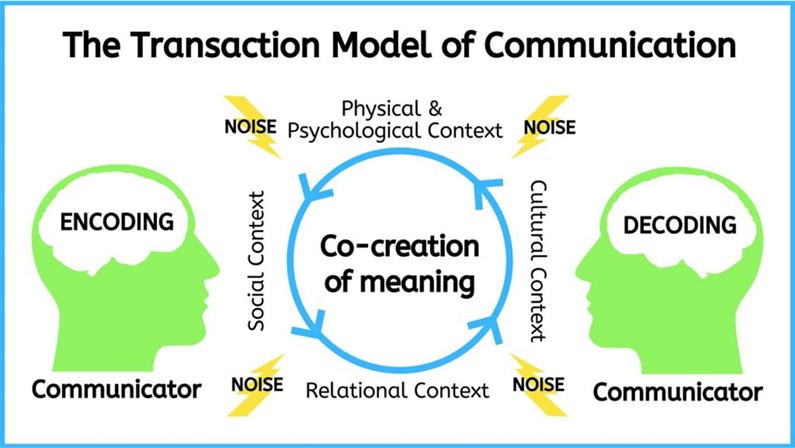
Reminder: The Communication Model
We “encode” messages based on how we are feeling, what’s going on, how we prefer to communicate. Other people “decode” messages based on how THEY are feeling, what’s going on for THEM, and how THEY prefer to communicate.
The gaps happen when those preferences don’t line up and we make assumptions about what’s going on.
Effective communication happens when we make an effort to think about the person we need to communicate with, show empathy about whatever they may be going through, choose the right communication medium, and use words and phrasing that are super clear to the receiver.